
On February 10, 2026, the international conference Bridging Horizons: Celebrating the Deep-rooted China-Pakistan Friendship was held at Razia Hall, Allama Iqbal Campus, University of the Punjab, Lahore. It was co-organized by the College of Art and Humanities, University of the Punjab, Lahore; the Institute for a Community with Shared Future, Communication University of China; and the Embassy of the People's Republic of China in Pakistan.
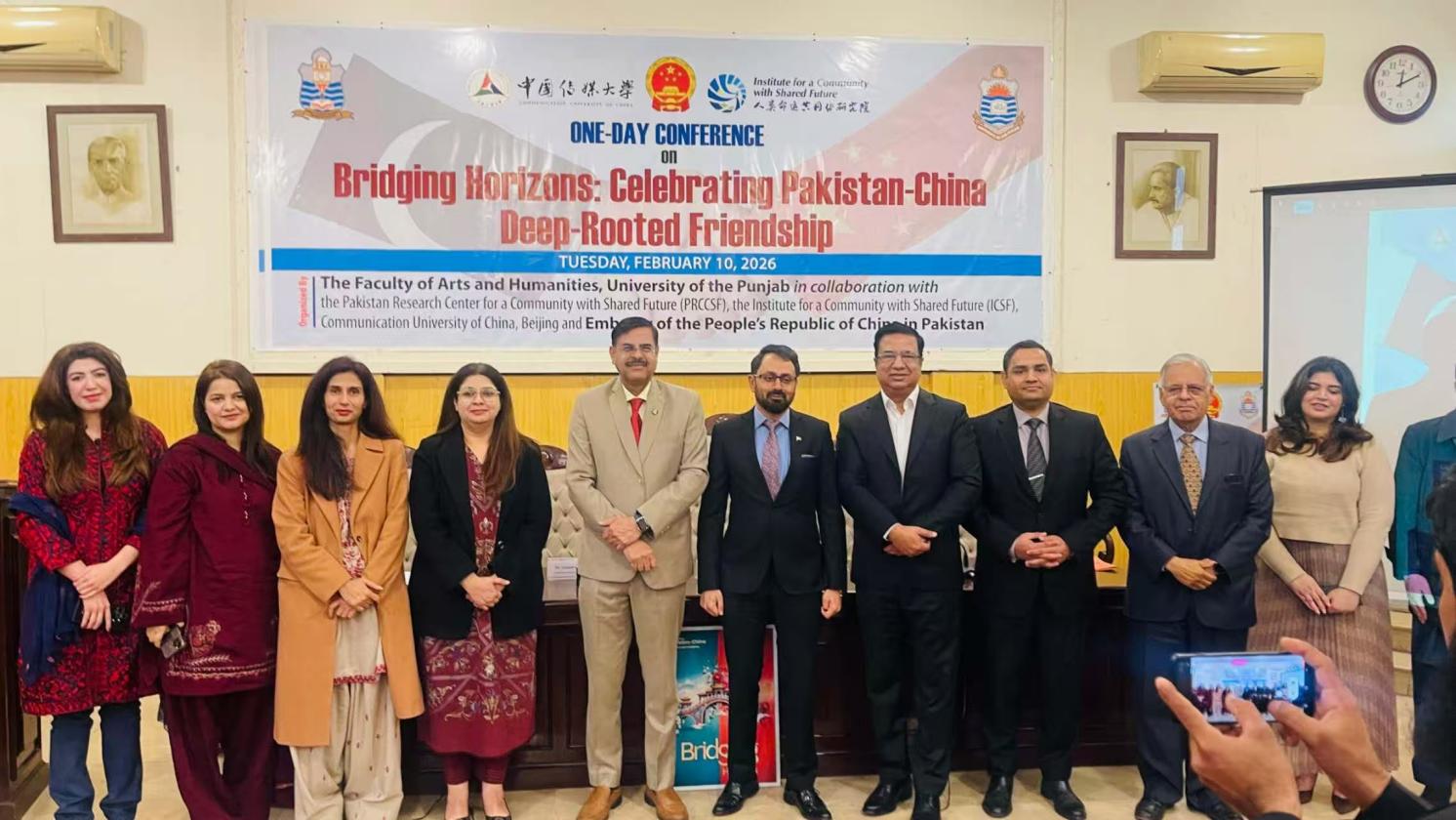
This conference aimed to celebrate the time-honored and ever-strengthening friendship between China and Pakistan, and to promote academic dialogue, people-to-people exchanges, and scholarly cooperation covering the political, economic, cultural, and strategic dimensions of the bilateral relationship. The conference included four sessions, which highlighted various areas of China-Pakistan cooperation and recognized students with outstanding achievements in academics and innovation.
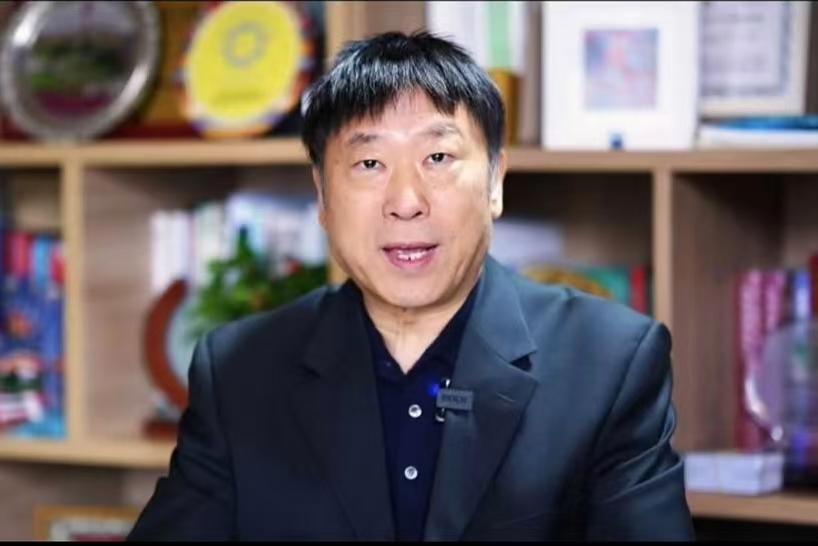
Professor Li Huailiang, Dean of the Institute for a Community with Shared Future at Communication University of China, delivered an online speech at the conference. He pointed out that the conference carries important historical significance as it commemorates the 75th anniversary of the solid China-Pakistan friendship founded on trust and mutual respect. He emphasized that such academic platforms are not merely ceremonial events, but intellectual venues that help shape futureleaders. He further underlined the value of youth participation in poster, essay, and speech competitions, noting that creativity, research, dialogue, and people-to-people exchanges serve as vital pillars sustaining the bilateral relationship. He encouraged students to regard themselves as inheritors of this precious legacy, promoting sustained cooperation, mutual understanding, and a shared commitment to building a China-Pakistan Community with a Shared Future.
During the opening ceremony, Professor Dr. Mahboob Hussain, Dean of the College of Art and Humanities at the University of the Punjab, Lahore, stated in his address that dialogue, research collaboration, and cultural exchanges lay a solid foundation for academic platforms that enrich and strengthen China-Pakistan relations.
In his welcome address, Mr. Khalid Taimur Akram, Executive Director of the Pakistan Research Center for a Community with Shared Future, highlighted the great potential of youth engagement, research-based initiatives, and people-to-people exchanges in advancing the vision of a China-Pakistan Community with a Shared Future.
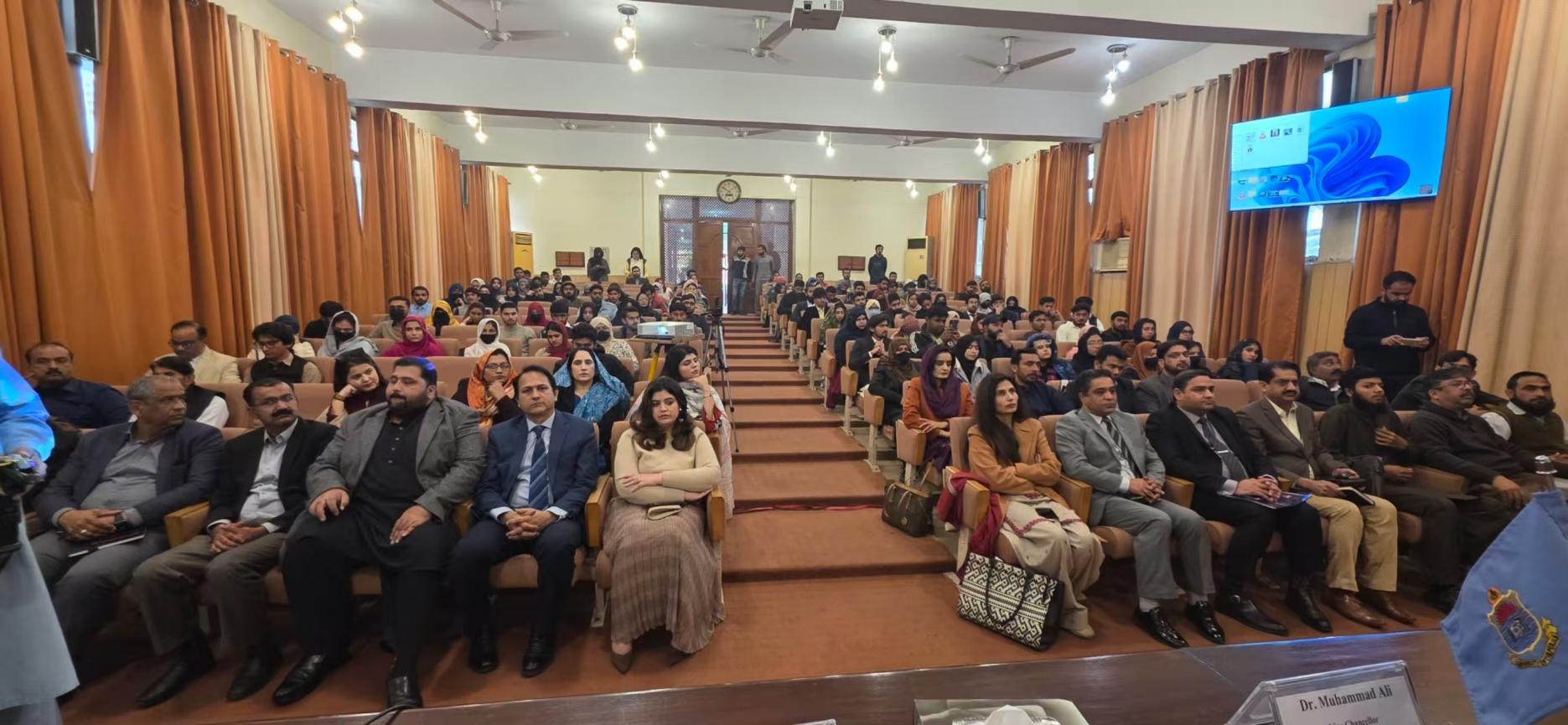
Scholars from diverse research fields shared insights on a wide range of topics, including resource cooperation, technological innovation, academic exchanges, the international landscape, mutual learning among civilizations, and media communication.
On the Digital Silk Road 2.0 and AI technology, Mr. Zeeshan Quresh shared prospects for future technological development. Mr. Haris Naeem emphasized the importance of China-Pakistan geological cooperation and sustainable resource utilization. Professor Dr. Muhammad Ali maintained that further strengthening academic exchanges and international partnerships with China is particularly crucial for future progress.
Regarding regional and international dynamics, Dr. Muhammad Usman Askari discussed geopolitical issues between China and Pakistan against the backdrop of a multi-polar world. Dr. Kishwar Munir analyzed the impact of the South Asian security complex on China-Pakistan relations.
Dr. Tahir Mumtaz Awan noted that institutionalizing mechanisms for dialogue among civilizations through Confucius Institutes helps build strong bridges of friendship between China and Pakistan. Dr. Fauzia Hadi Ali expressed high expectations for regional integration and connectivity cooperation between the two countries. Mr. Noor Ullah pointed out the positive role of rapidly developing new media tools in enhancing communication, mutual trust, and cultural exchange between China and Pakistan.
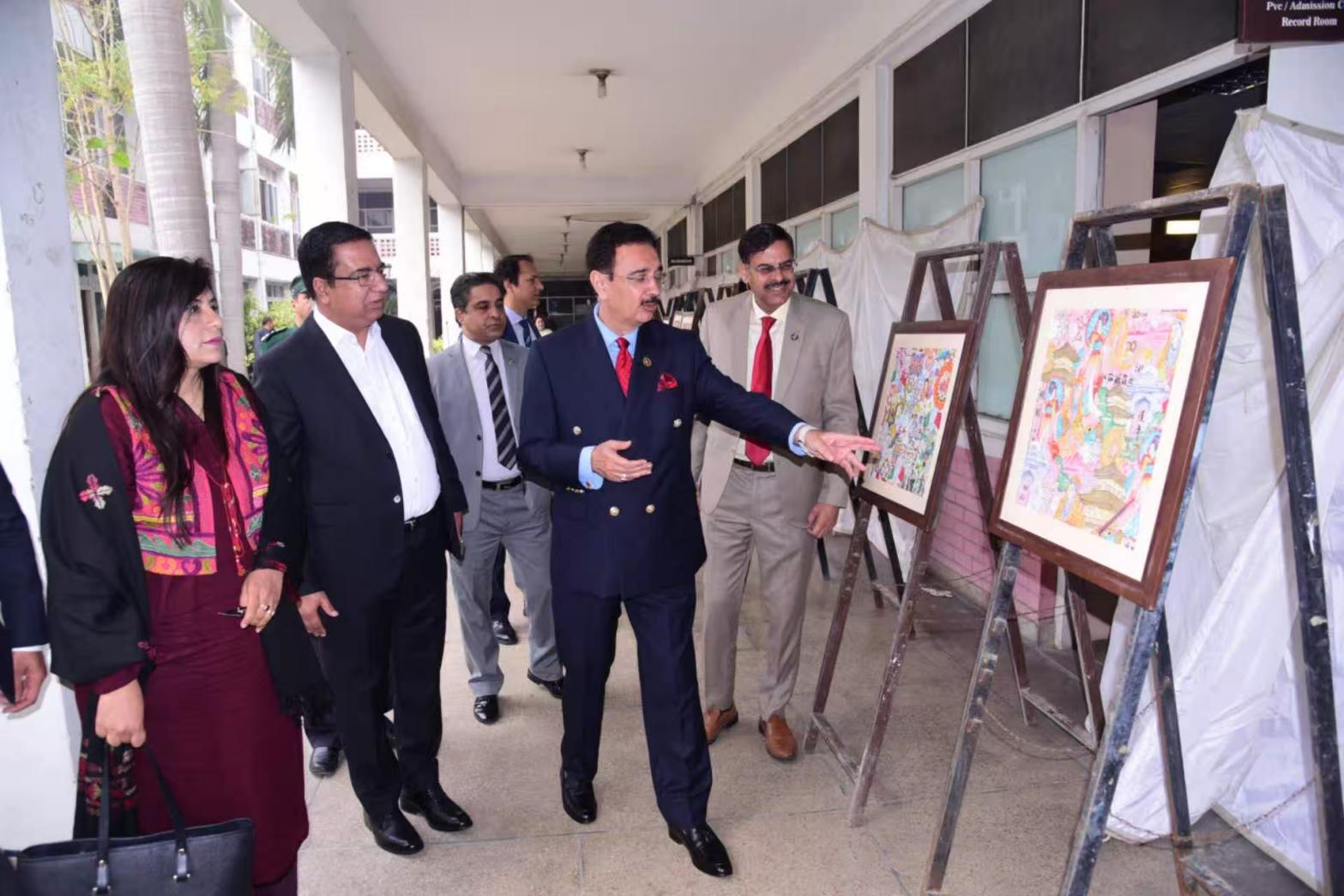
One of the highlights of the conference was the launch of a poster competition themed China-Pakistan Friendship. The competition encouraged students to express creatively their understanding of the historical, cultural, and strategic dimensions of China-Pakistan relations. Students from various academic backgrounds took an active part, vividly presenting themes of friendship, cooperation, development, and a shared future through a variety of poster designs.
During the event, students presented their diverse research on China-Pakistan relations. Their rich content and clear logical reasoning received positive feedback from the audience. Afterwards, the organizers presented souvenirs to the chairpersons, co-chairpersons of each session, and award-winning students in recognition of their active contributions to the conference.
The conference attracted nearly 500 participants, reflecting strong academic enthusiasm and a shared resolve to cement China-Pakistan friendship for future generations. In today’s global context, the vision of a Community with a Shared Future provides important inspiration for countries to jointly address challenges and pursue common development.


